Showing posts with label buenos aires. Show all posts

Friday, April 8, 2016

Gaucho Traditions Preserved in San Antonio de Areco

Buenos Aires Province, Argentina

Historic Buildings


By Roy Heale

Quite often visitors to Buenos Aires are looking for interesting escapes into the local countryside yet close to the city. Those seeking a real gaucho experience and a sample of local history often choose the quaint town of San Antonio de Areco founded in 1730 on the banks of the Areco River. Located about 110 km northwest of the city, the town dates back to the early 18th century and many of the original buildings are well preserved and function today as cafes, restaurants, and boutiques.

Unique Cafes


Residents of Buenos Aires often visit for the peaceful atmosphere and picturesque colonial streets. The traditions of the gaucho and criollo (people of pure Spanish descent born in the New World), are well preserved, especially among its artisans, who produce fine silverwork and saddlery. Gauchos from all over the pampas show up for November’s Día de la Tradición, where you can catch them in their traditional cowboy outfits astride their horses, strutting the cobbled streets.

Puenta Viejo---Old Bridge

The city is the home of the Museo Gauchesco Ricardo Güiraldes and has been declared a city of historic national interest by the Argentine Government.
San Antonio de Areco’s compact town center and quiet streets are very pedestrian friendly. Around the Plaza Ruiz de Arellano, named in honor of the town’s founding estanciero (ranch owner), are several historic buildings, including the Iglesia Parroquial (parish church) opened in 1780.

Iglesia Parroquial

There is an abundance of great dining options with prices much more reasonable than those in the City of Buenos Aires. The local specialty is, of course, meats cooked on the parilla with fresh vegetables and salads.

Parilla Delights

If you prefer a longer visit than a one day excursion, there are a few small hotels around the town offering Bed&Breakfast plus the Hotel & Spa San Carlos on the riverbank park.

Hotel & Spa San Carlos

Like many other small towns in this part of Argentina, Areco shuts down during the afternoon siesta.

Local Produce

Regular bus service runs fro Retiro Omnibus Terminal and the journey is just under two hours depending on traffic.
Take a step back in time, relax and enjoy some Gaucho history in the pampas of Buenos Aires province.


Tuesday, January 19, 2016

Stunning Video of Buenos Aires with Aerial Shots


Watch this video and see some great aerial shots of the city parks and buildings. Then come and visit and see for yourself!
http://www.bubblear.com/video-stunning-aerial-shots-buenos-aires

Tuesday, December 23, 2014

A New Shopping Addition To Palermo Soho, Buenos Aires

Distrito Arcos---The Arches District

By Roy Heale
Paraguay Street Entrance to Distrito Arcos


The first day of summer in Buenos Aires heralded the opening of the new Distrito Arcos outdoor shopping district. After just over one year of protracted court proceedings regarding the environmental impact of the new shops and parking the new mall has finally opened.

Lush Tropical Landscaping

Bounded by Juan B Justo, Santa Fe Avenida, Godoy Cruz, and Paraguay streets, it is close to the new Science Center and the Metrobus or Palermo Subway stations. The developers have recovered the old railway viaduct arches of the San Martin train line for boutique shops and created new retail shops and lush green spaces.

Unique Design

The shops open inwards onto roofed spaces and the common areas are almost all outdoors. The building’s main feature is the brick construction of the railway viaduct that defines both the inner walls and the façade. Outside, the focus is placed mainly on the green spaces. The commercial promenade is landscaped with green areas that provide the design’s motif. Street benches and other urban features are strategically placed all along, together with terraces, benches, and also a special area for holding events. The building is ornamented with a series of canopies along the arches that convey a rhythmic perspective to the overall construction design.

Incorporating The Old Arches

Distrito Aros is an urban commercial concept with original and unique features that set it apart from traditional shopping centers. Imbued by the premium outlet spirit, it offers a unique shopping experience in the city, combining the best brands with an outlet concept, an interesting range of products, gastronomic options, and the best prices in a unique environment.


Incorporating New Architecture

There are sixty-five local shops, twenty kiosk market stalls, 450 underground parking spaces, a room for artistic activities, and space for art exhibitions. Green areas were planted with over 200 trees and lush tropical plants. It will function as a clothing outlet with known premium brands, more dining options, a fitness center, and other services. It is estimated that would create about 1,200 full time jobs.

Green Spaces

Familiar names like Starbucks, Adidas, and Levis are present along with local brand name chain stores like Wanama, Rapsodia Vintage, and of course the popular Argentine Freddo ice cream chain. The complex exudes a relaxing, tranquil shopping atmosphere and is sure to prove popular with tourists and locals alike.

Main Entrance: Paraguay 4979

For More Information:


Saturday, July 5, 2014

Local Markets at Ing Maschwitz, Buenos Aires

Mercado Maschwitz


By Roy Heale
 
 
The small town of Ing Maschwitz in the province of Buenos Aires was named after Carlos Maschwitz who was born in Buenos Aires on May 7, 1862, son of Mr. Georg Eduard Maschwitz, first manager of the Bank of London.
 
Zeppelin Restaurant Garden

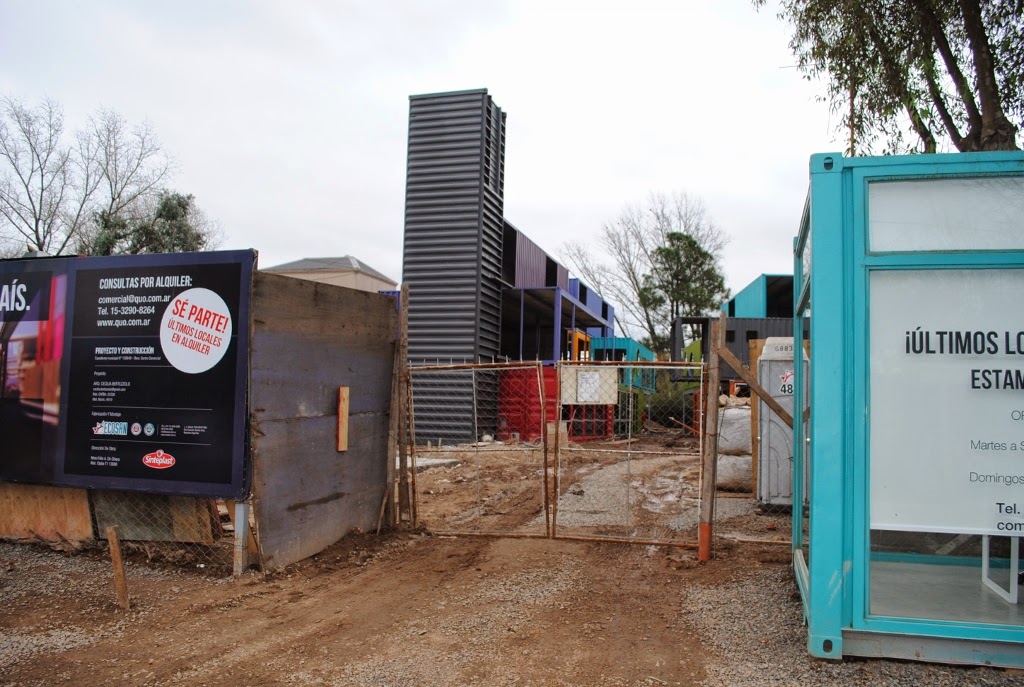
Today this small historic village is home to the Mercado Mendoza and the Mercado Maschwitz offering a selection of local restaurants, cafes, boutiques, and local handicrafts. Using recycled materials, the unique construction of these markets is slightly reminiscent of La Boca in the city of Buenos Aires but less commercial and more authentic Argentine. There is a new market under construction scheduled to open in December 2014 and using large steel shipping containers for the main building materials.

New Market Under Construction

This is a popular place with local residents for weekend brunches and shopping expeditions. Just a one hour bus ride from the city of Buenos Aires, it is also a well known escape from the city to enjoy the relaxed rural pace of life.

Emilio Mitre Square


In the Emilio Mitre Square, which is also the central park for the townsite, ther is an old London phone booth which has been converted into a unique public library.


This charming village is a relaxing place to spend a day away from the traditional tourist attractions and experience the real rural Argentine customs and lifestyle.

Mercado Maschwitz
 
Mercado Mendoza
 

Getting There: Take the Escobar express bus from Plaza Italia in the city and ask the driver to announce Maschwitz. Upon arrival at the town it is a short walk to the village or the markets located on Mendoza Street.

Friday, June 6, 2014

Historic Colegiales Barrio, Buenos Aires


Colegiales Barrio
By Roy Heale

The Colegiales Barrio of Buenos Aires offers a laidback alternative to its noisier neighbors Palermo and Belgrano. Covering just over two square kilometers, it is one of the city's smaller barrios and a largely residential one. Known for its large, open green spaces and treed residential streets, Colegiales is squeezed between Belgrano, Chacarita, and Palermo. Although it is off the tourists' beaten track there are some interesting points of local history to discover.

Street Art

Historically Colegiales was paired with Chacarita---the barrio situated immediately south---and the two were originally known as Chacarita de los Colegiales. In its beginnings this community was made up of small Jesuit-owned estates that were utilized as student retreats. In 1767 the Jesuits were expelled and the Spanish took control of the land. After the turn of the century and the commencement of Bernandino Rivadavia’s government in 1826, large numbers of European immigrant workers settled in the area and forced it to be divided into the two separate barrios of Chacarita and Colegiales.

Today, Colegiales maintains a strong residential feel that is characterized by its sleepy cobblestone streets lined with overhanging trees. With its close proximity to Palermo, the neighborhood is experiencing increased numbers of bars and restaurants.

Mercado de Pulgas

One major tourist attraction of Colegiales is the Mercado de Pulgas---Flea Market. Founded in 1988 and situated at the intersection of Avenida Dorrego and Alvarez Thomas, this indoor market presents an eclectic collection of furniture, art work, antiques and other curiosities. If you are planning to stay long term in Buenos Aires you might just find a bargain for your new apartment here.

When in Colegiales you can retrace the footsteps of some of Argentina’s most famous sons. The comic strip Mafalda----written by humorist Quino (Joaquin Salvador Lavado)---was based on the barrio and Plaza Mafalda is dedicated to the creator and his artwork. Other famous names of the barrio include journalist Ulises Petit de Murat and inventor Ladislao Jose Biro. The latter invented the ballpoint pen and Fundacion Biro (Cramer 450) is dedicated to helping and promoting young Argentine inventors.

Pasaje General Paz

On a sunny day, take time to relax in one of the many plazas or take a stroll along Pasaje General Paz, (a narrow pedestrian promenade) which attracts visitors to see its mature trees, bridgepaths, streams and ornate, balconied Andalusian-style patios. Avenida Elcano is a wide leafy boulevard that connects the barrio with Belgrano and Chacarita. Situated on the latter you’ll also find Elcano Grill, a classic neighborhood parrilla, and The Oldest, a pleasant British-styled pub. When venturing deep into the back streets of Colegiales you will be treated to a wonderful mix of classic porteño cafés, closed-door restaurants and live music venues. Mix with a stylish hipster crowd at Pipi Cucu (Ciudad de la Paz 557), a quirky French bistro-restaurant. Mismatched plates, glasses and cutlery add to the aloof charm of the place whilst the bartenders are known for mixing delights such as red fruit martinis.

Pipi Cucu French Restaurant

Recently, upscale lofts were developed in what years ago were the massive Buenos Aires flour mills (known also as Silos Minetti), at 1916 Dorrego Street. Elegant and trendy, they were built into the silos themselves and have become popular with local yuppies.

Silos Minetti

Colegiales also has a rich religious heritage including The Holiest Corpus Christi Monastery (450 Amenábar St.)which has been the centuries-old home to the Order of Barefoot Carmelites.

The Holiest Corpus Christi Monastery

Tuesday, May 13, 2014

A Grand Country Mansion


San Isidro, Buenos Aires, Argentina


By Roy Heale

Victoria Ocampo Mansion
Argentine writer and intellectual Victoria Ocampo, CBE was described by fellow renowned Argentine author Jorge Luis Borges as La Mujer Más Argentina---The quintessential Argentine woman. She was well known as an advocate for others and as publisher of the legendary literary magazine Sur. In her long professional career as a writer and critic in her own right she became one of the most prominent South American women of her time. Her long life---April 7, 1890 to January 27, 1979---was filled with awards and distinctions and she is interred in the well known Recoleta cemetery.

Main Entrance


Although she owned several homes in Buenos Aires, San Isidro, and Mar del Plata, perhaps her favorite was her summer home, a country mansion in San Isidro, which is now just a 15 minute drive or a short train ride from the heart of Buenos Aires.

Gazebo


Originally this was her summer home and today it is a UNESCO museum. The tranquil grounds are beautifully kept and the main floor of the mansion is open to the public where you can enjoy the period décor. There is a small indoor/outdoor restaurant offering interesting menu items at affordable prices. A nominal admission charge of ARS$30 for adults helps with the upkeep. It is a short walk from the Beccar train station or from the San Isidro village center. This is where Victoria Ocampo hosted the likes of author Graham Greene and politicians like Indira Gandhi. The restoration of this historic mansion allows visitors to step back in time and visit the library of her works.

Outdoor Cafe


The splendid gardens were created by Victoria herself. One of the lesser known facets of Victoria Ocampo was her love of plants, gardens and nature. She inherited this passion from her mother and learned the names of plants and gardening tasks at an early age. Victoria also introduced these contemporary style gardens in her Mar del Plata and Palermo Chico homes. She visited the major gardens of the world, wrote several gardening books, some of which can be found in the on-site library.

Living Room


The Villa Ocampo UNESCO project was launched in 2003 in collaboration with the Argentine government, the Municipality of San Isidro, the Association of Friends of Villa Ocampo, plus many donors and sponsors. Under the direction of UNESCO the house, garden, furnishings, art and photography collections plus 11,000 books in the library were restored. The site was opened to visitors and aimed at a diverse audience offering a broad and comprehensive cultural program.


Dining Room

Open:

Wednesday to Sunday and holidays from 12:30 PM to 7:00PM


Guided Tours:

Wednesday, Thursday and Friday: 15:00hs and 16.30hs.

Saturdays, Sundays and holidays: From 14:00hs, every hour approx.

Splendid Grounds

For More Information Visit: www.villaocampo.org

Friday, April 18, 2014

The Garden of the City---Villa Devoto, Buenos Aires

By Roy Heale


Tree-Lined Streets
A short train ride from the heart of downtown Buenos Aires is the upscale neighbourhood of Villa Devoto which is also known as ‘El Jardin de la Ciudad’----The Garden of the City---due to its tree-lined streets. In fact, Villa Devoto famously boasts more trees than any other barrio of Buenos Aires. It derives its name from Count Antonio Devoto, a member of the Buenos Aires elite society from the late 1800s and early 1900s. Devoto, an Italian immigrant and philanthropist, owned the majority of the land that today makes up the barrio, which he acquired in 1888 when sections of the town of San Martin were incorporated into Buenos Aires Capital Federal.

In 1910, Count Antonio Devoto commissioned the building of Palacio Devoto, one of biggest mansions in Buenos Aires spread over more than 10,000 square meters. An icon of the barrio, the palace was designed by Italian architect Juan Antonio Buschiazzo and adorned with Florentine mosaics and gold, silver, and bronze trimmings. Unfortunately, Devoto died in 1916 before Buschiazzo had finished his work and completed the construction.

Today, Villa Devoto is famed for being the home of football icon Diego Maradona’s family members and the childhood neighborhood of tennis star Gabriela Sabatini.

Plaza Arenales

At the heart and center of Villa Devoto is Plaza Arenales, a large public square and park occupying the equivalent of four blocks. Here you will find a vast array of pine, walnut, eucalyptus, and magnolia trees, and history proclaims that at the turn of the 20th century the plaza was a popular meeting place of the Italian mafia. The plaza is named after General Juan Antonio Alvarez de Arenales, to whom a commemorative monument was built in 1958. There is also a statue of Antonio Devoto. Today, the plaza is a favorite evening and weekend hang out spot of Villa Devoto residents. Walking one block north along Nueva York street from Plaza Arenales you will discover the imposing Palacio Devoto.

Many other historic and grand mansions known as palacios can also be found in this barrio as you wander around the tree-lined streets. Of particular historic interest is the ornate, decorative style of Palacio Ceci built cerca 1895 and located on Lincoln between Gualeguaychú and Havana.

Palacio Ceci


Visit the Café de Garcia (Sanabria 3302) which opened in 1900 and is like a journey back in time as little has changed since its early beginnings. With walls adorned with football and tango memorabilia, it is as porteño as a café can get.

Café da la Plaza


The Café da la Plaza (Lincoln and Nueva York) offers a superb bistro-styled menu mixing Argentine, Armenian, and European ingredients. Overlooking the Plaza Arenales, it has become a Devoto institution for coffee, lunch, or dinner since opening in 1988.

A final delight can be found at the Vagon Devoto Bar and Restaurant beside the train station. Enjoy this unique dining experience on board an old historic British 1906 train wagon from the original Kassel Express. The food is excellent and the atmosphere is charming in this antique dining car. Choose from appetizers including bruschettas, pate de maison, or smoked salmon with cream cheese. Then enjoy traditional Argentina parilla cooked meats of beef, pork or lamb. For lighter appetites there is a selection of fresh salads, pastas, or fish dishes. The desert selection is varied and includes a wonderful cheesecake with red berries sauce.

Vagon Devoto Dining Car


Discover the proud inhabitants and a classic Buenos Aires lifestyle in Villa Devoto which is served by both the FC Urquiza and FC San Martin train lines with frequent service to the city center. A few hours spent in the Garden of the City Villa Devoto barrio will make for a unique Argentine experience undiscovered by most tourists but a genuine local education to be enjoyed.


Thursday, April 3, 2014

An Afternoon in Vicente Lopez, Buenos Aires

By Roy Heale
Sometimes an escape from the heart of the city of Buenos Aires and the traditional tourist attractions can be a welcome relief on a hot summer afternoon. If you are feeling adventurous then a short twenty minute train ride from the Retiro station will take you to the Barrio of Vicente Lopez and the expansive coastal parkland and beaches.

                                            Paseo de la Costa
Just a few blocks from the train station is Carlitos restaurant where you can enjoy a refreshing brunch of crepes, omelets, sandwiches, or salads accompanied by freshly squeezed juices or beer and wine. The excellent service and home cooked meals are a delight at economical prices. Start your visit here and then take the short two blocks walk to the coastal promenade.

                                           Carlitos Restaurant

                                          Carlitos Patio


The Paseo de la Costa is an expansive riverside green space with different sectors and is ideal for enjoying the outdoors with family or friends. During weekends the Coastal Promenade is closed to vehicular traffic and welcomes thousands of people who come to walk, jog, roller blade, and bicycle alongside the Rio de la Plata.

Some of the places that stand out in the Paseo de la Costa are the pedestrian bridge, the amphitheater "Arturo Illia " the memorial of the millennium, the Arenales Peninsula, and Vito Dumas tribute monument to the " Lone Sailor ".

                                          Treed Areas Providing Shade
 
The Children's Park with its thirty-two acres is an ideal walk for everyone to enjoy, especially on hot sunny days. From the coastal walk enjoy the Rio de la Plata vista with numerous sailboats and where fishing enthusiasts along the riverbank try their luck with their fishing rods and lines.

                                          Outdoor Sports
 
The park has areas with trees, picnic tables, and sports fields for soccer and more. There are also restrooms, a nursing station, kiosks, drinking fountains, family playgrounds, and parking for cars. In recent years the city government has installed artificial sandy beaches with umbrellas, chairs, showers and sports activities for families to enjoy in the sun and fresh air. In addition there is free Wi Fi Internet for those who need to stay in touch.

                                           Vicente Lopez Café

On your return journey allow enough time to visit the Vicente Lopez Cafe on the north side of the train station. This delightful café is perfect for a light breakfast or afternoon tea, coffee and fresh pastries. The baked goods are a delight and prepared every day to ensure a tasty treat. They have a courtyard patio across the street, outdoor sidewalk tables, and a large indoor restaurant. The short menu offers a variety of teas, coffees, sandwiches, salads, and of course freshly baked delights. The service is impeccable, efficient, and friendly. It's a great place for a snack or light meal and is conveniently located to start your visit with a traditional Argentine breakfast of medialunas or to enjoy your last few moments in Vicente Lopez with a sweet treat.


Wednesday, December 4, 2013

Parks and Plazas Abound in Buenos Aires


By Roy Heale

One of the beautiful aspects of Buenos Aires is the numerous parks and plazas that allow for outdoor enjoyment and relaxation.

The lush park Barrancas de Belgrano was designed by the famous French-Argentine landscape and park architect Carlos Thays, who designed many open spaces in the city. It spans several city blocks and is overlooked by highrise apartment buildings. The same neighborhood had an ancient eighteenth century Franciscan chapel close to where now stands a City Government building. Currently a memorial plaque marks the place where the chapel was located.
 

Las Barrancas de Belgrano is located on the slopes of the old river banks which, until the early nineteenth century, delineated the River Plate when it was in flood.


With mature trees and grassy slopes, the Plaza has over sixty species of trees and plants including ombúes, palms, magnolias, paradise, lime, oak, honeysuckle, coral trees, banana trees, and more. It also has laneways built with nineteenth century cobblestones, benches for resting, a playground for children, tables for playing board games. Many people meet there for various exercise routines including gymnastics, Tai Chi, and aerobics. Among the sculptures is an exact scale replica of the Statue of Liberty, produced by the same creator of the statue of the same name in New York---Frenchman Frederic Auguste Bartholdi. It also has a large bandshell where neighbors gather to dance the tango, musicians perform, which hosts frequent music recitals on warm summer evenings.
 
For more about the green space options in Buenos Aires visit my application at:
 www.GPSmycity.com or search iTunes for Gpsmycity applications.